Survey of Energy Consumption of Multi-Unit Residential Buildings (SECMURBs) 2018 – Data Tables
Natural Resources Canada's Office of Energy Efficiency has developed the following data tables produced from the Survey of Energy Consumption of Multi-Unit Residential Buildings (SECMURBs) for the 2018 consumption year. The survey was developed and implemented by a private consultant.
These tables provide estimates of the energy consumption of a sample of MURBs from eight specific Canadian municipalities for 2018: Halifax, Montreal, Ottawa-Gatineau, Toronto, Hamilton, Winnipeg, Calgary, and Vancouver; however survey coverage is not national. As such, results are an estimate of the aggregate of these eight municipalities, and do no reflect Canadian totals (see below).
Notes on methodology
For this survey, a MURB is defined as a building or set of buildings comprising multiple apartments having a primary exterior door access, with each of the apartments connected by an interior door and central corridor. There must be a minimum footprint of 600 m2 or have at least four floors. Properties defined as hotels, residence hall/dormitories, and senior care community facilities are not included in this survey.
In addition, note that MURB properties were surveyed, meaning that a property could be comprised of more than one building. Of the 11,715 (weighted total, see below) MURB properties, 91% were one building only, 5% were comprised of two buildings, and the remaining properties comprised three or more buildings.
Survey Sampling
As there is no existing comprehensive listing of all MURBs in Canada, a listing was developed for each municipality to estimate the total population and to serve as the sampling frame. This involved using several sources, including information from Statistics Canada, as well as data from utilities, provincial landlord and building management associations, and other industry sources.
Weighting
Weighting is a statistical process whereby the response from each individual MURB (survey respondent) in a municipality is assumed to represent a defined number of similar properties that were not included in the sample but comprise the relevant population of that municipality.
Responses were then weighted for each municipality, and the aggregate of these results was derived to achieve the total count of MURB properties represented by the survey results. As such, the totals in these tables represent the weighted data for the aggregate of the eight municipalities (see below).
Adjustments, modifications and caveats
After adjusting for outliers and non-response, and then applying the weights, the survey tabulated 11,715 MURBs from the eight Canadian municipalities. There are caveats that place limitations on the data:
- the property type (i.e., condominium, rental, other) was not reported for 26% of respondents (25% of floor space), and is therefore not known;
- while survey respondents reported amenities such as parking and indoor/outdoor pools, their true presence overall may not be fully reflected in these tables;
- energy use intensity (EUI) is the relationship between energy use and floor space. Unless otherwise indicated, EUI applies to the whole property, including common areas;
- SECMURBs reports data on recommissioning and retrofits that reflect initiatives that occurred during the 2013-2018 survey period only. As such, some of these initiatives may have occurred outside the 5-year survey period and are not reflected in the tables, thus these results must be reviewed with caution; and,
- the respondent count for several municipalities was too low to establish sufficient data quality to allow for disclosure of municipal-level data as well as certain building characteristics.
As a result of these caveats and data quality limitations, only aggregated data for the total results from the eight municipalities are provided, and data for individual municipalities are not available. Please also note that some results have been suppressed to protect respondent confidentiality.
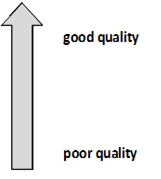
Data quality indicators
| Coefficient of variation | Quality indicator (QI) |
|---|---|
| 20% or less | A |
| greater than 20% and less than or equal to 30% | B |
| greater than 30% and less than or equal to 40% | C |
| greater than 40% | F |
Data Tables
Please note that quality indicators (Q.I.) for energy intensities are available upon request.